Share this article
Quick Commerce in India: Transforming the Future of Retail Fulfilment
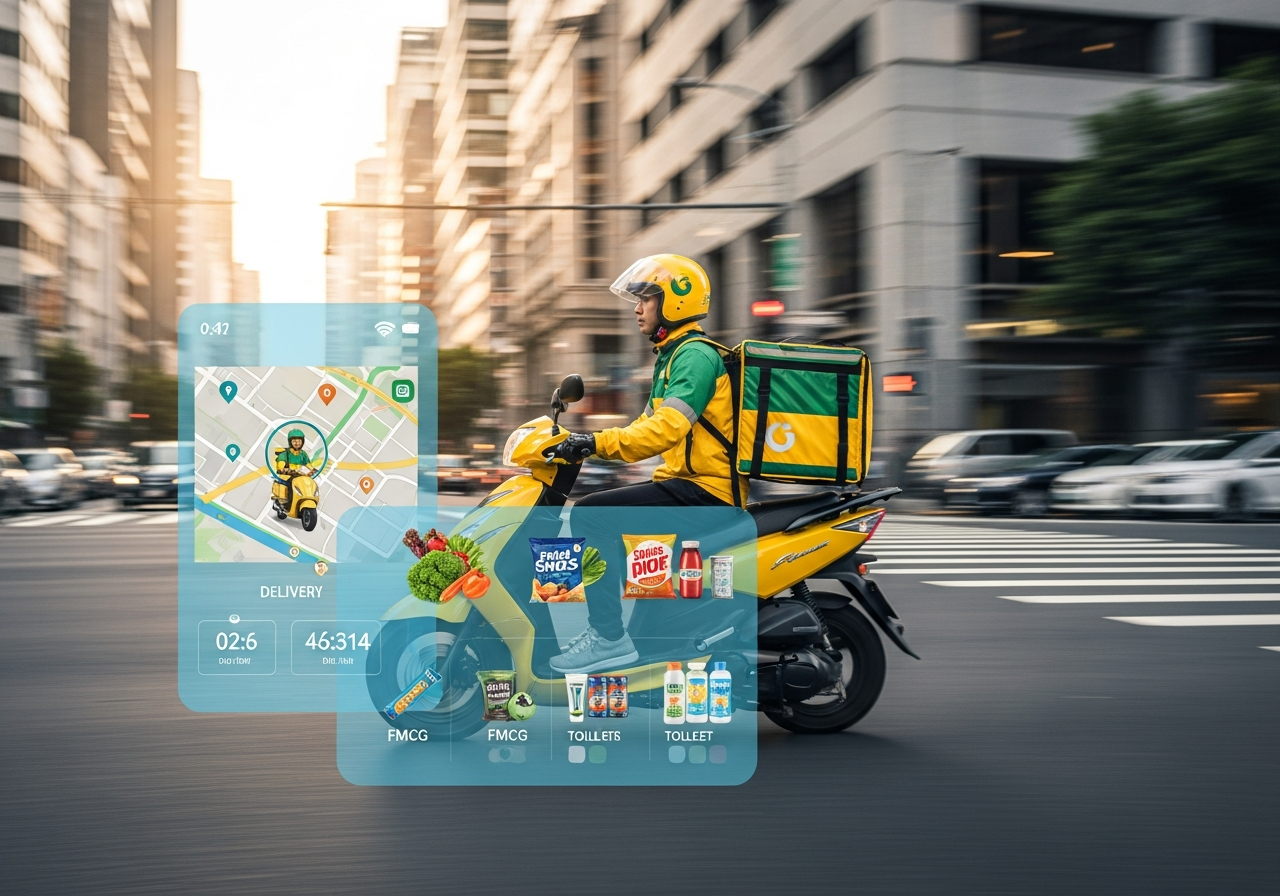
In today’s fast-paced digital economy, speed has become a decisive factor in customer satisfaction. Consumers increasingly expect instant access to products, minimal delivery timelines, and seamless order experiences. This growing demand has given rise to Quick Commerce, a retail model focused on ultra-fast delivery, often within 10 to 30 minutes.
Quick Commerce, commonly referred to as Q-commerce, is rapidly reshaping the retail ecosystem in India. From groceries and daily essentials to personal care and select fashion categories, brands are rethinking supply chains and fulfilment strategies to remain competitive.
What is Quick Commerce?
Quick Commerce is an evolution of traditional e-commerce that emphasizes speed and proximity. Unlike conventional online retail, which relies on centralized warehouses and standard delivery timelines, Quick Commerce operates through strategically located micro-fulfilment centers or dark stores within urban neighborhoods.
These localized hubs allow brands and platforms to process and deliver orders almost instantly, meeting the growing consumer preference for convenience and immediacy.
How Quick Commerce Works
- Micro-Fulfilment Centers: Inventory is stored closer to end consumers in high-demand locations.
- Technology-Driven Operations: Advanced demand forecasting, real-time inventory tracking, and automated order management.
- Last-Mile Optimization: Dedicated delivery partners ensure rapid dispatch and delivery.
This model significantly reduces delivery time while maintaining operational efficiency.
Impact of Quick Commerce on Retail Brands
Quick Commerce is not just a logistics innovation; it is a strategic shift that impacts branding, inventory planning, and customer engagement. Retail brands adopting Quick Commerce gain several advantages:
- Enhanced customer satisfaction through instant fulfilment
- Higher purchase frequency driven by convenience
- Improved brand visibility in high-intent purchase moments
- Competitive differentiation in crowded marketplaces
However, success in Quick Commerce requires precise inventory planning, strong operational partnerships, and data-driven decision-making.
Quick Commerce and the Indian Market
India’s dense urban population, growing smartphone penetration, and rising disposable incomes make it an ideal market for Quick Commerce. Metropolitan cities and Tier-1 markets are witnessing rapid adoption, with consumers prioritizing speed over traditional delivery windows.
As the ecosystem matures, categories beyond groceries—such as beauty, fashion essentials, and lifestyle products—are increasingly being integrated into Quick Commerce models.
Role of Strategic Partners in Quick Commerce
For brands, entering Quick Commerce without the right expertise can be operationally challenging. Strategic retail and e-commerce partners play a vital role in enabling seamless onboarding, inventory optimization, marketplace integration, and performance tracking.
At Zaroori Retail, we help brands navigate evolving commerce models by aligning technology, operations, and marketplace strategy to ensure sustainable growth.
Future of Quick Commerce
Quick Commerce is expected to become an integral part of omnichannel retail strategies. As infrastructure improves and consumer expectations continue to evolve, brands that adapt early will gain a significant competitive edge.
In the coming years, success in retail will not only depend on product quality and pricing, but also on how quickly and efficiently brands can deliver value to customers.
Conclusion
Quick Commerce represents the next phase of retail innovation in India. By combining speed, convenience, and technology, it is transforming how consumers shop and how brands operate. For businesses aiming to stay relevant in a highly competitive market, embracing Quick Commerce is no longer optional—it is a strategic necessity.
Share this article
Related Services
Recommended Next Reading
Stay Updated
Get marketplace tips in your inbox

About the Author
Deepinder Ahluwalia
Founder & CEO – Zaroori Retail
Deepinder Ahluwalia is the Founder & CEO of Zaroori Retail, India's leading marketplace onboarding agency. With over 8 years of experience in e-commerce and marketplace management, he has helped 4200+ brands successfully launch on Myntra, Nykaa, Ajio, and 30+ premium platforms. An IIM Lucknow alumnus, Deepinder is recognized as a thought leader in the Indian e-commerce ecosystem.
Areas of Expertise